Works on 2 Mbps
Designed for the connectivity hospitals in Bengaluru actually have. The ward app works offline.
Bengaluru, Karnataka
India's IT capital has a fast-growing private hospital sector alongside government medical colleges. Mid-size hospitals face stiff competition from chains and need modern ERP to stay audit-ready and digitally discoverable.

Bengaluru healthcare
Compliance ready

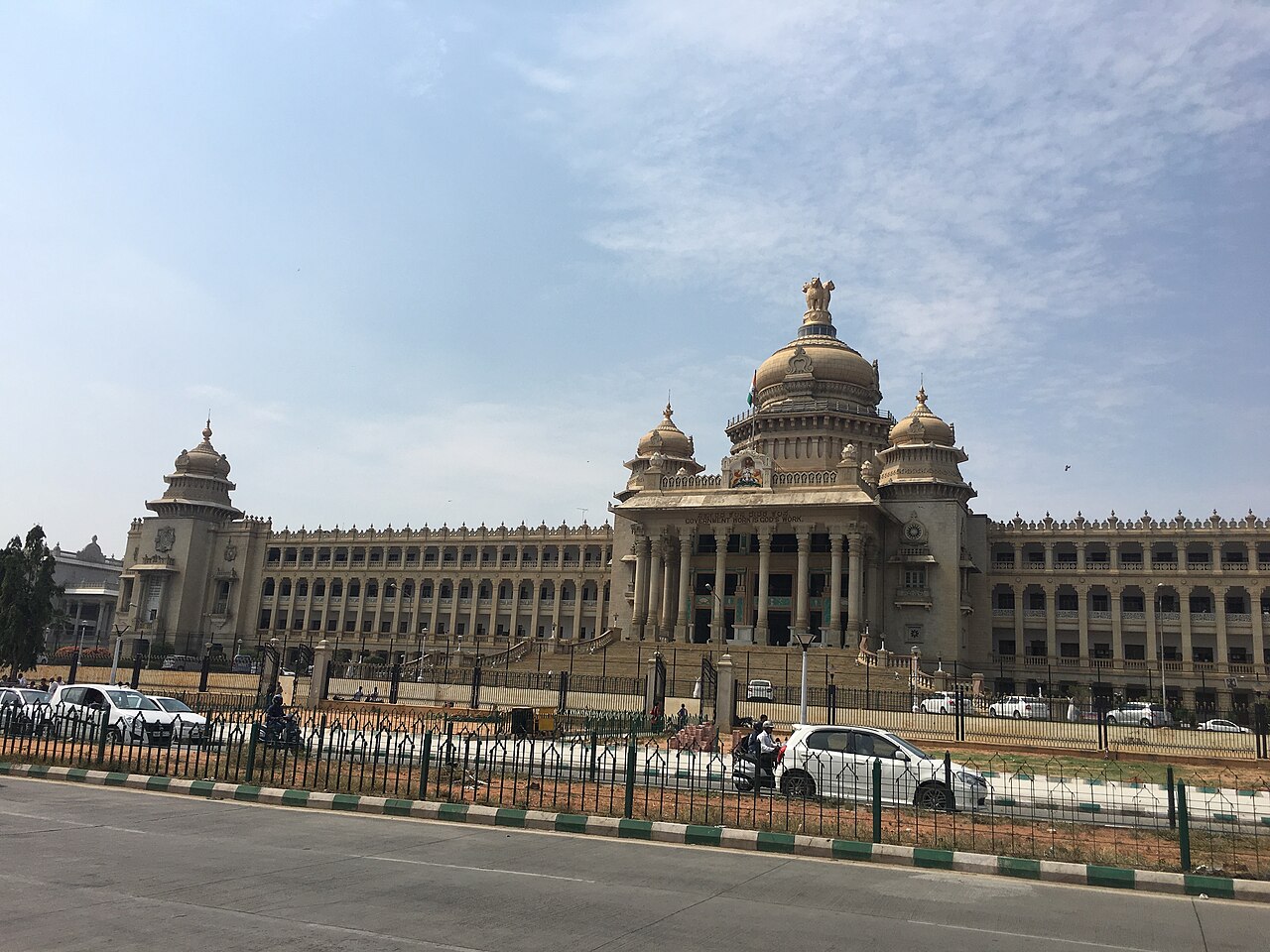
Healthcare landscape in Bengaluru
India's IT capital and OneCity's home city — a dense, competitive private-hospital market already running on established HMS vendors, corporate health-check volume from the city's tech workforce, and a patient base with high digital-literacy expectations.
State scheme: Ayushman Bharat – Arogya Karnataka (AB-ArK), integrated with PM-JAY and administered by the Suvarna Arogya Suraksha Trust, the State Health Agency for Karnataka.
Running a hospital in Bengaluru
Bengaluru isn't a tier-2/3 city — it's the toughest market in the country to sell hospital software into, because most mid-size and large hospitals here already run something. The realistic opening isn't replacing an incumbent system outright; it's the corporate health-check volume, the multi-location group practices coordinating across branches, and the smaller specialty clinics an enterprise HMS was never priced for.
Patients here expect a digital-first experience — online booking, instant billing, a portal that actually works on a phone — because they get that everywhere else in the city. A hospital system that feels like 2015 software stands out immediately, and not in a good way, to a Bengaluru patient base.
The tech workforce also means seasonal demand spikes tied to corporate wellness programs and annual health-check cycles — OPD volume that's genuinely different in character from walk-in general practice, needing scheduling and package-billing that match how corporate health checks actually get paid for.
Who OneCity fits in Bengaluru
| Hospital size | Plan | Modules |
|---|---|---|
| 15-20 bed nursing home | Free — up to 5 doctors | OPD, billing, pharmacy basics |
| 50-150 bed multi-specialty | Growth (per bed/doctor) | + IPD, lab, insurance claims |
| 150+ bed tertiary/referral | Enterprise | + radiology, blood bank, HR/payroll, full module set |
15-20 bed nursing home: Often running on spreadsheets or a basic billing tool before switching — the free tier replaces both without a migration project, no card required to start, and no minimum contract locking the hospital in before it's proven the fit.
50-150 bed multi-specialty: Typically the point where paper-based IPD records and manual insurance claims become the actual bottleneck, not doctor availability — this is where a single connected system starts paying for itself in staff time alone, since the same patient record now carries through admission, ward stay and discharge billing.
150+ bed tertiary/referral: Where the case for one system is strongest, since patients move between departments constantly and a fragmented record slows every handoff — radiology, blood bank and HR run on the same patient and staff data as everything else.
See exact pricing at /pricing.
Karnataka compliance OneCity handles
Biomedical waste segregation and the digital manifest fall under the BMW Rules 2016 (Ministry of Environment, Forest and Climate Change), filed through the Karnataka State Pollution Control Board. The DPDP Act 2023 — Section 4 — requires explicit, purpose-specific consent before any health data is processed or shared; OneCity captures this once at registration through the ABDM consent flow and reuses it across every module that touches that patient's record. NABH 6th edition assessors expect documented evidence against the AAC (Access, Assessment and Continuity of Care) and COP (Care of Patients) chapters — OneCity's clinical workflows generate that evidence as a by-product of normal use rather than a separate reporting exercise. GST e-invoicing on patient bills follows CGST Rule 48 format requirements, with the Bill of Supply switch under CGST Rule 49 applied automatically where GSTIN isn't present. Pharmacies handling Schedule H1 and NDPS-controlled drugs need a narcotics register that survives inspection under the NDPS Act 1985 — OneCity's pharmacy module maintains that register as part of normal dispensing. Labs pursuing NABL accreditation under ISO 15189:2022 need documented sample-to-result traceability — the laboratory module logs every step from collection to result release as part of normal operation. Facilities running ultrasound or radiology services fall under the PCPNDT Act 1994 — Form F documentation is mandatory for every scan, generated automatically by the radiology module. Patient registration also supports ABHA linkage and verification directly, generating FHIR R4-compliant records shareable through India's national Health Information Exchange. See the full compliance map at /compliance.
Getting started in Bengaluru
Start on the free tier — no setup fee, no card required, live in under a day for OPD, billing and pharmacy. Once the team is comfortable, a short pilot on one department (usually OPD or the pharmacy counter, since both have the clearest before-and-after for staff to judge) validates the workflow against Bengaluru's actual patient volume before rolling out IPD, lab and insurance claims. Support runs IST business hours, matching every hospital's own operating day — there's no timezone gap to plan around, and no separate onboarding fee tied to how many modules the hospital eventually switches on.
Designed for the connectivity hospitals in Bengaluru actually have. The ward app works offline.
GST e-invoice, BMW Rules 2016, NABH formats, ABDM and DPDP — not bolted on after the fact.
Free up to 5 doctors. Paid plans scale by bed, doctor or encounter. No setup fee.
Explore more
Government health portals
Yes. OneCity is cloud-hosted and available to any hospital in Bengaluru, Karnataka. No local server needed.
The admin and clinical interface is English. Kannada + English support for patient-facing screens is on the roadmap.
Free up to 5 doctors. The Starter plan is ₹999/month. Growth and Enterprise plans scale by bed or doctor count.
The interface is English-first with Hindi and Kannada support on the roadmap for patient-facing screens.
Any private, trust or charitable hospital. Government hospitals can use it where eHospital NIC is not mandated.
Yes. The ward app is offline-first — it keeps working through a connectivity drop and syncs automatically once the link is restored.
Yes. The TPA/Insurance Claims module handles Ayushman Bharat – Arogya Karnataka and Ayushman Bharat PM-JAY claims — pre-authorisation, package mapping and claim tracking in one place, alongside any private insurer the hospital already works with.
Both. The free tier covers up to 5 doctors with OPD, billing and pharmacy — right-sized for a small nursing home. Paid plans scale by bed, doctor or encounter count as the hospital grows, on the same system, with no separate product to migrate to later.
OPD, billing and pharmacy basics can be live the same day on the free tier. A full rollout including IPD, lab and insurance claims typically follows a short one-department pilot, so the timeline depends on how fast the hospital wants to move through it — there's no mandatory implementation project or minimum contract period forcing a slower pace.
Yes. Patient registration supports ABHA linkage and verification at the point of registration, and every record generated is FHIR R4-compliant for sharing through India's national Health Information Exchange.
Yes. NABH 6th edition assessors look for documented evidence against the AAC and COP chapters — OneCity's clinical and nursing workflows generate that evidence as part of normal daily use.
Free up to 5 doctors. A 30-minute walkthrough on real data.